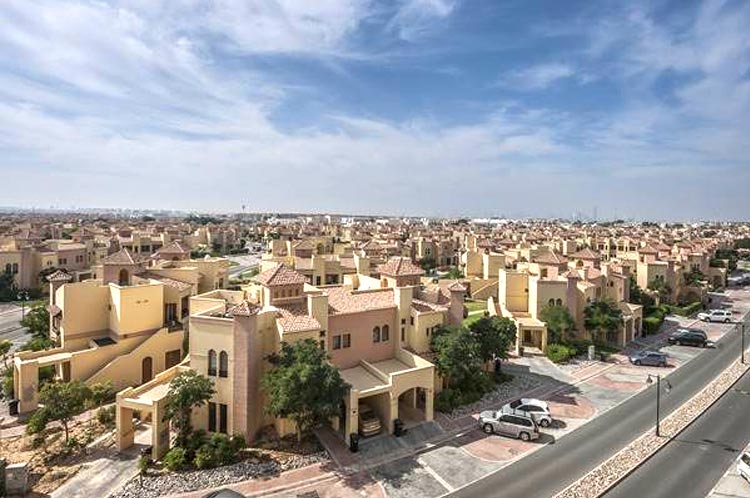
With an increasing population of more than 3.3 million, new housing incentives and innovative visas rules designed to attract investors, the Dubai property market is witnessing a big rebound complemented by new emerging real estate trends.
New Sale Market vs. Resale Market
The real estate sector is generally divided into 2 market categories: primary and secondary market.
The primary or new sales is the first sale of any particular unit by the property developer to the investor or buyer, when purchase prices are very competitive, and strong capital growth can be attained. The resale market, on the other hand, encompasses properties that have been introduced into the market either to be rented or occupied by subsequent owners. This secondary market represents in general the bulk volume of property sales.
The Dubai property market is no exception to the rule. A study conducted by Arabian Business indicates that during the second quarter of 2021, 6,007 transactions were carried out in the new sale market generating AED 9.16 billion against 9,590 transactions for the resale market with a total value of AED 27, 66 billion!
Increase in Foreign Buyers’ Confidence in Short Period
Gaining the trust of new foreign buyers to encourage investment is one of the main objectives of the UAE, successfully achieved so far given the brilliant results within the Dubai real estate market.
The first measure towards this aim was to reassure expats and investors regarding the pandemic as Dubai was among the first countries to speed up vaccination among its residents. Currently, the UAE tops global rankings of vaccination rates with 91% of residents having received their first vaccine dose, and 8o% their second dose.
On another level, Expo Dubai that started on October 1, 2021, has definitely put Dubai back on the map of the world favourite destinations, with more than 2.3 million visitors only in the first month.
Furthermore, the government has launched a series of innovative initiatives to encourage expatriates not only to invest in the Dubai real estate market, but to live here as well. Such market-boosting measures include granting a five-year retirement visa for people over 50 years old, a one-year remote working visa and, and a 10-year golden residency visa for select professions. Dubai has also allowed anyone fully vaccinated with one of WHO COVID-approved vaccines to apply for a visa. Indeed, according to the World Travel and Tourism Council, tourism accounts for about 11.5 percent of Dubai’s GDP.
All these incentives have paid off as the Dubai Land Department (DLD) has recorded by the last week of November 579,43M real estate transactions with total sales ringing in at 75.43% and this number is expected to rise.
According to the DLD, 17,979 new investors were registered in July, representing 69% of the number of real estate investors registered since the beginning of 2021.
But the most interesting asset for investors in the Dubai property sector is the legal protection of foreign investments guaranteeing the rights of all parties. Digitalized operations are another asset since any resident or investor can manage their real estate property, whether selling or completing real estate transactions, or paying fees remotely, thanks to high-end technologies. In addition, property tax is paid once and for all when purchasing a residential property.
Finally, the high return on investment is one of the biggest perks for many expatriates in the Gulf region and the Middle East who prefer to invest in the Dubai real estate sector.